



Complete Fiber Optic Infrastructure
Optical fibers are used in various applications, including outdoor (Outside Plant - OSP) and indoor (Inside Plant - ISP) installations. OSP focuses on the installation of fiber optic cables and related components in outdoor environments, enabling long-distance communication.
ISP, on the other hand, deals with the indoor installation and connectivity of fiber optic cables, connecting devices within buildings or controlled environments. Both OSP and ISP are critical for establishing a robust and efficient fiber optic network.




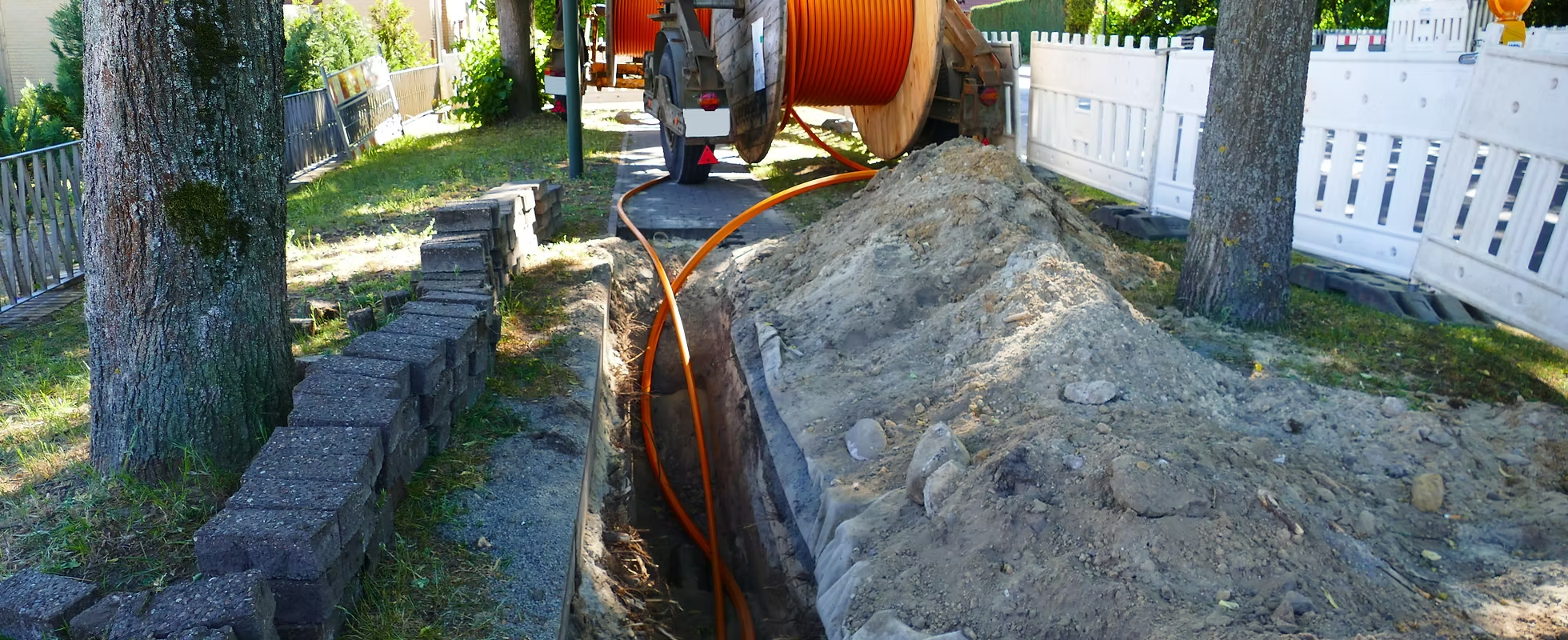
Outside Plant (OSP)
Outside Plant refers to the physical cabling and components used in telecommunications that are located outdoors or between buildings. OSP includes the infrastructure required for long-distance communication and comprises several key components:
1. Fiber Optic Cables
These are ruggedized cables designed to withstand environmental factors. They are buried underground, strung along utility poles, or laid underwater to connect cities, countries, or continents.
2. Splice Closures
These protective enclosures house and protect the spliced optical fibers.
They are weatherproof and prevent water or dust from entering the cable.
3. Connectors
Connectors are used to join optical fibers or connect fibers to network equipment. OSP connectors are designed to be weather-resistant.
4. Ducts and Conduits
OSP often involves the use of ducts and conduits to protect fiber optic cables, especially in urban areas. They provide a pathway for the cables and protect them from physical damage.
5. Aerial Cables
Fiber optic cables can be strung between utility poles, using aerial cables, to cover large distances. These cables are designed to withstand exposure to weather conditions.
6. Trenching
In some cases, especially in urban environments, fiber optic cables are buried underground in trenches to protect them from external elements and damage.
Inside Plant (ISP)
Inside Plant refers to the cabling, equipment, and components used within buildings or controlled environments. ISP focuses on connecting devices within a specific location, such as an office building, data center, or campus.
1. Fiber Optic Patch Cables:
These are short optical cables used to connect network devices within the same room or building. They can be simplex or duplex, connecting various equipment like computers, switches, and routers.
2. Patch Panels:
Patch panels provide a central location for managing fiber optic connections. They allow network administrators to route fibers from different locations to the appropriate networking equipment.
3. Fiber Optic Connectors:
Connectors used in ISP are designed for ease of use and quick connections within controlled environments. They are not necessarily weatherproof since they are used indoors.
4. Transceivers and Optic Equipment:
ISP includes various networking equipment, including transceivers that convert electrical signals into optical signals and vice versa.
5. Fiber Optic Distribution Frames (ODFs):
ODFs are used to organize and connect incoming and outgoing fiber optic cables within a data center or telecommunication room.
6. Racks and Enclosures:
These are used to house networking equipment, patch panels, and other hardware securely.